Installation site specific
project Mara Cantoni, Luigi Ceccarelli, Lelli & Masotti
photos Lelli e Masotti
proses and verses Mara Cantoni
music and sound design Luigi Ceccarelli
video by Mara Cantoni, Luigi Ceccarelli, Lelli e Masotti
produced by DDR Videoflot, Gerardo Lamattina
voices Mara Cantoni, Ermanna Montanari, Giovanna Mori, Sonia Bergamasco, Paolo Bessegato, Gabriella Franchini, Enrico Fink, Elena Bucci, Camillo Grassi, Sandro Cerino, Marco Cavalcoli.
music production and realization Edison Studio- Roma
“Inferi” e “Scherzo” music production and realization IMEB-Bourges
staging Leonardo Scarpa,
audio and lights project Marino Pandolfini, LPE
production Ravenna Festival
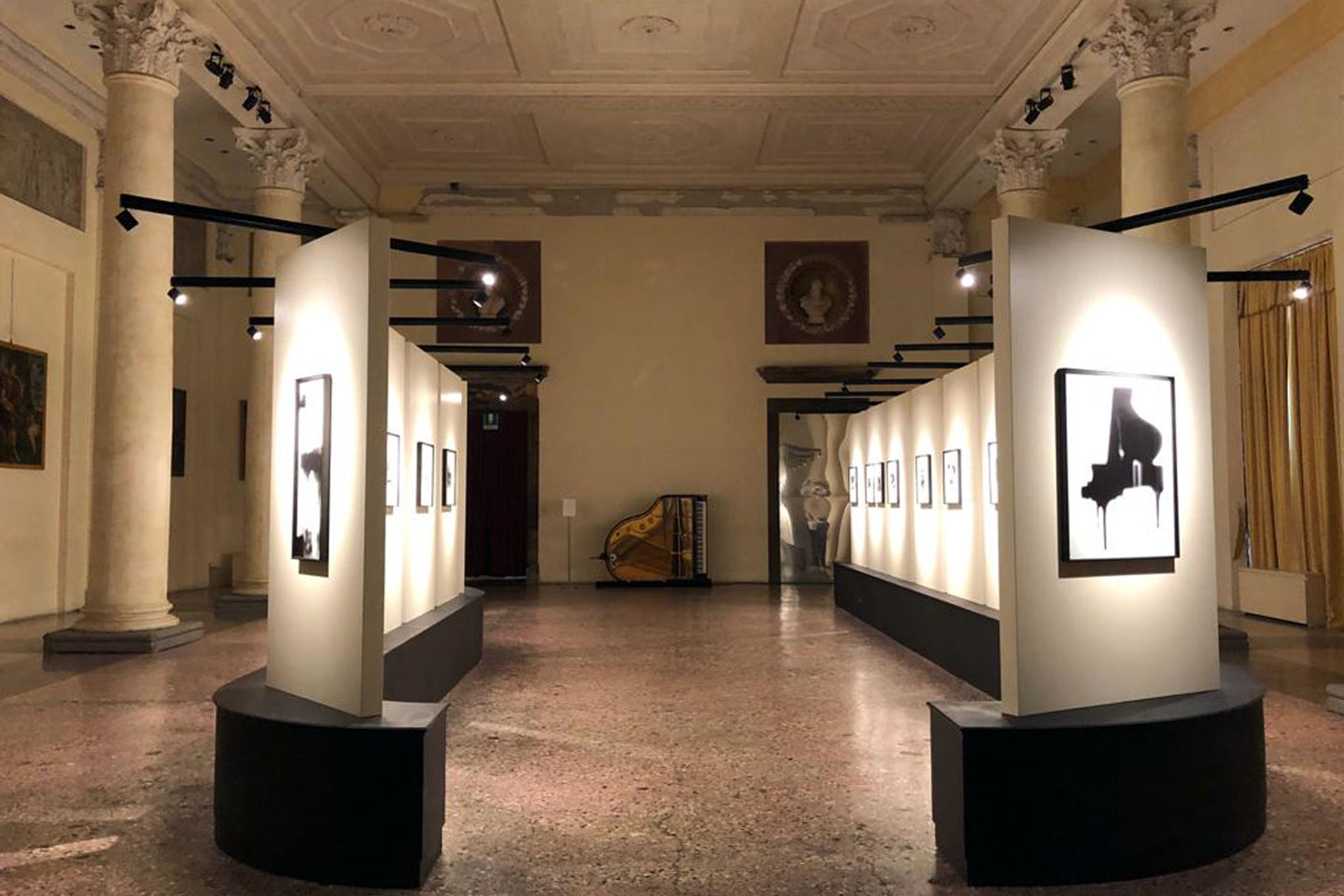
exibit
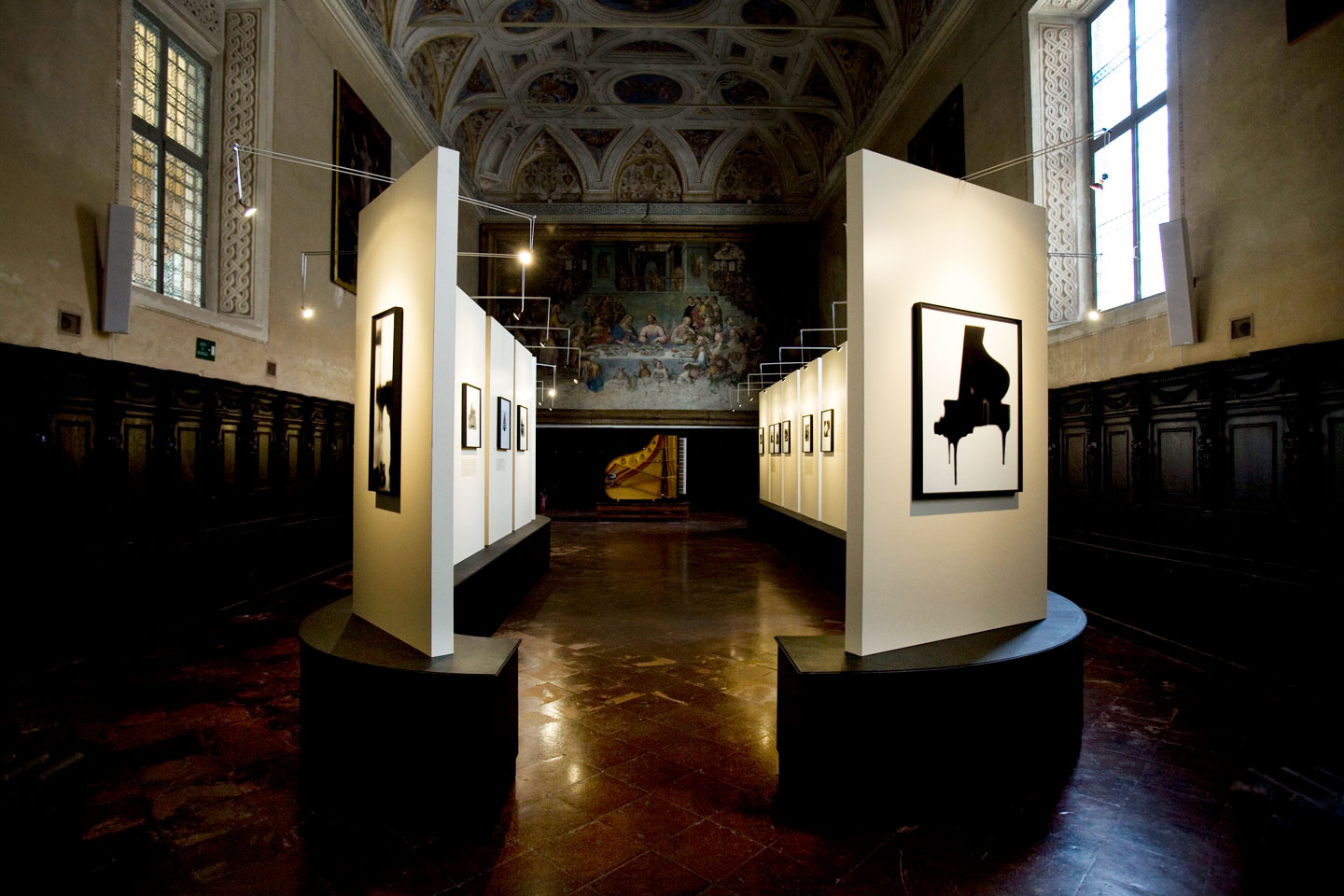
June 16 – July 18, 2009 – Ravenna Festival, Sala Dantesca of the Library Classense of Ravenna
Sept 39 2010 – Juan 13 2011 , RomaIngresso della sede RAI via Asiago 3
May 17 – 26, 2019 – Milan, Palazzo Reale, Sala delle otto colonne (also included in Piano city program)
projection fo the videos
Còrdoba (Argentina), Museo de Bellas Artes “Emilio Caraffa” XX Jornadas Internationales de Mùsica Electroacùstica – Istituto Italiano di Cultura – Sept 17 – Oct 22- 09
Inferi (part of Bianco Nero Piano Forte(
26 Sept 09 New York (USA) Columbia University, Italian Academy for Advanced Studies in America
a program of Eletroacoustic Music:: “The Real, The Symbolic and The Imaginary”.
What are things when man is absent? Inert forms, prints on the surface of history or pulsing figures of the imaginary? And, particularly, what does a piano with no pianist do? Does it wait, meditate, evoke, is it simply there? Does it feel nostalgia for man? Perhaps the absence of man represents only the nostalgia it has of itself. Of sound, of timbre, of tone.
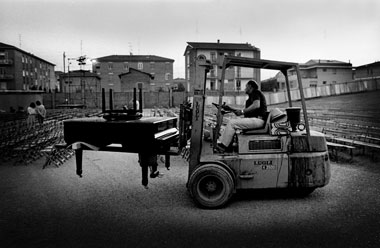
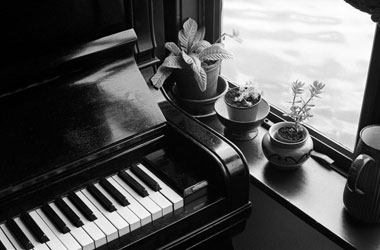
This original idea for an installation was born from a photographic series of great evocative power. The dreamy and vaguely surreal candour of the images, by encountering the ironic and imaginific texts and a multiform and ever-changing world of sound, gives place to a most fascinating and compact work.
Different art-forms not only speak to one another, but, by listening to each other, converge.
So the piano, elected to the role of protagonist, rather than be observed by us, observes us. Implacable, black, shiny, tense. And also absolutely present, resting on one side, naked, receiving projected images on its cords, only lightly filtered by a veil, making its cords sing, stimulated by slight electro-mechanic vibrations.
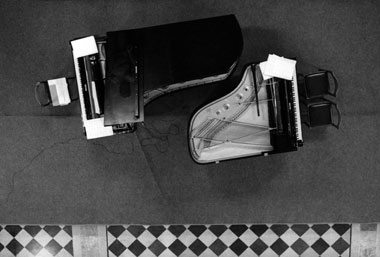
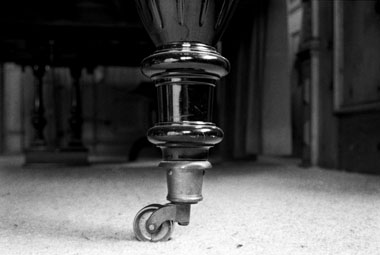
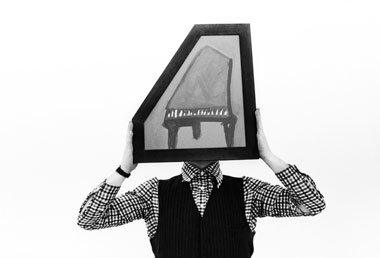
Forty photographs, all rigourously in black and white, of pianos in various contexts, seen from unusual perspectives: they are revealed as creatures who are sometimes alarming, almost always mysterious.
Twenty accompanying texts go with the images, infusing them with a sort of evocative and sometimes whacky animism: they are brief stories, dialogues, poetic verses or paradoxical commentaries where the fantastic dimension is woven together with literary or musical references.
The sound ambience brings out the piano’s most unusual and interior voice, transforming the visual journey into a multi-dimensional space, translating written words into infinite shades of dialogue with the instrument.
(translation by Lee Colbert)
Bianco Nero Piano Forte
is made of 24 pieces, 40 photos and 24 texts.
voices Mara Cantoni, Ermanna Montanari, Giovanna Mori, Sonia Bergamasco, Paolo Bessegato, Gabriella Franchini, Enrico Fink, Elena Bucci, Camillo Grassi, Sandro Cerino, Marco Cavalcoli.
titles
01 – Attesa– 2:13
02 – Inferi – 4:58 – voice Ermanna Montanari
03 – Walzer – 1:32 – voices Gabriella Franchini, Sonia Bergamasco, Carole Chambellon
04 – Fragile– 2:32 – voices Giovanna Mori, Izumi Arakawa
05 – Yin Yang – 3:50 – voice Mara Cantoni
06 – Peluche – 2:13 – voice Pietro Lucchino
07 – Prospettive– 3:20 – voices Paolo. Bessegato, Giovanna Mori, Gabriella Franchini
08 – Sogni– 2:31 – voices Mara Cantoni, Giovanna Mori
09 – Blue – 2:48 – voice Marco Cavalcoli
10 – Chewing Gum – 2:49 – voices Camillo Grassi, Gabriel Kahn
11 – Alice – 2:21 – voice Mara Cantoni
12 – Scherzo – 4:10
13 – Arman – 0:08 – voice Paolo Bessegato
14 – Adagio– 3:02 – voice Giovanna Mori
15 – Rabbi Eliahu – 3:33 – voice Enrico Fink
16 – Pirati – 3:30 – voice Mara Cantoni
17 – Praline – 2:24 – voices Paolo Bessegato, Gabriella Franchini
18 – Trittico – 1:13 – voice Sonia Bergamasco
19 – Cage Rap – 2:06 – voices Sandro Cerino, Carole Chambellon
20 – Concerto n.1 – 0:15 – voices Mara Cantoni, Giovanna Mori
21 – Concerto n.2 – 0:21 – voice Paolo Bessegato
22 – Dall’alto – 4:32 – voice Mara Cantoni
23 – Eco e Narciso – 3:40 – voices Paolo Bessegato, Mara Cantoni
24 – Fuga – 3:16 – voices Paolo Bessegato, Elena Bucci, Camillo Grassi
Another piece of Bianco Nero Piano Forte is “Aura in Visibile.2” for piano and vibrating exciters.
Aura in Visibile.2 is the sound of the photographic part.
.
 CD – Bianco Nero Piano Forte
attached to the catalog of the installation
total duration: 65′
Edizioni Ravenna Festival
2009.
 CD – Compendium International 2000 Bourges
contains Inferi
from Bianco Nero Piano Forte
duration: 7′
Compact Disc: Imeb – Mnemosyne LDC278 II 19/20
2002
Buy the CD online
exibits in Ravenna, Biblioteca Classense and in Milan, Palazzo Reale, sala delle otto colonne